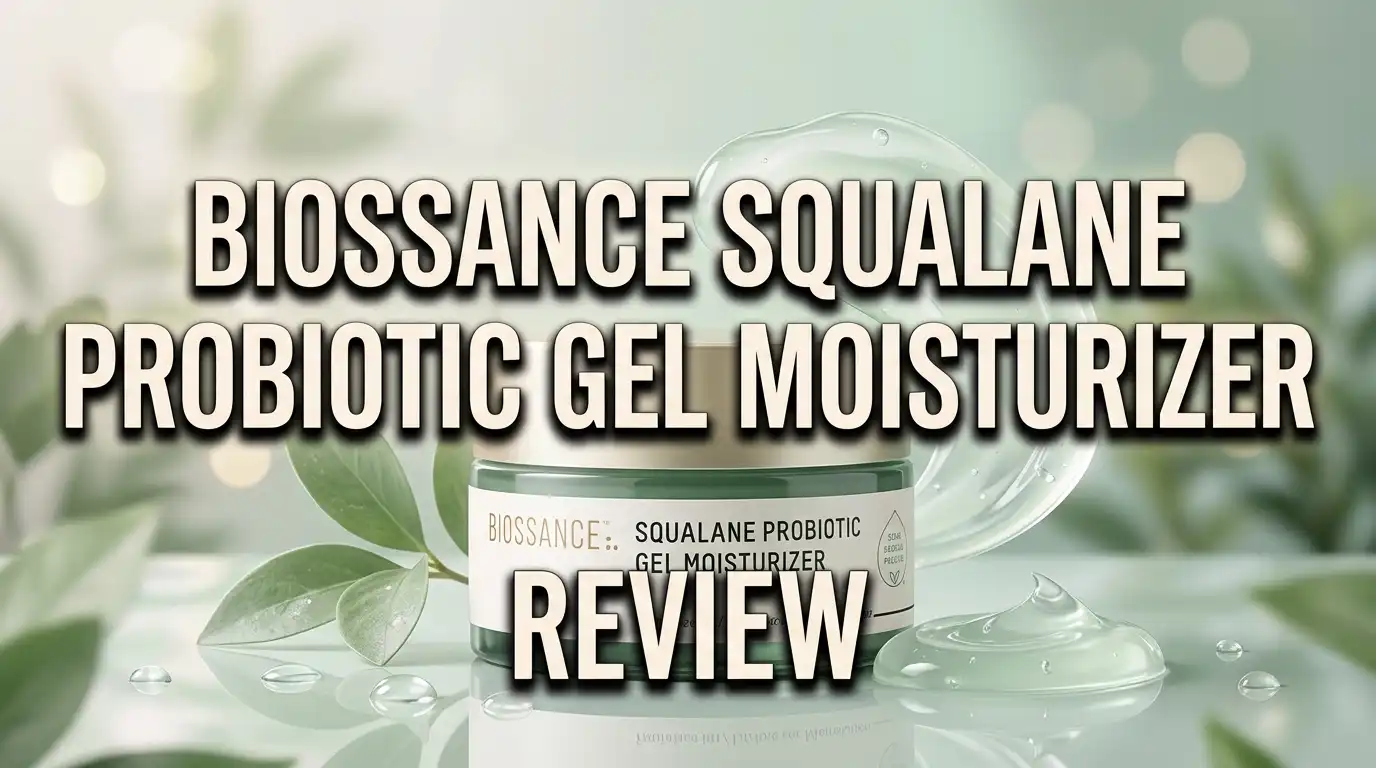
Redness, shine, and random breakouts can wear you down. You buy a new moisturizer, hope for calm skin, and end up with a greasy face by lunchtime. The Biossance Squalane + Probiotic Gel Moisturizer promises something different. It claims to hydrate, soothe redness, and balance oil at the same time.
I tested this gel for a full month on combination skin that reacts to almost everything. I tracked shine, texture, breakouts, and how it behaved under sunscreen and makeup. I also read through hundreds of buyer comments to see if my results matched the crowd.
This review covers the formula, the feel, the price, the honest downsides, and the best alternatives. By the end you will know whether this jar deserves a spot on your shelf in 2026.
Key Takeaways
- The formula centers on three heroes. Sugarcane squalane hydrates, encapsulated probiotics support the skin microbiome, and fermented bisabolol calms visible redness. Together they aim at reactive, congested skin rather than deeply dry skin.
- The texture is a true water gel. It sinks in within seconds and leaves a soft matte finish. Oily and combination skin types will love this weightless feel. Very dry skin may need a richer cream on top.
- It is fragrance free and alcohol free. The ingredient list stays short at 26 items, with no essential oils, which makes it a smart pick for sensitive and blemish prone skin.
- Price sits in the premium bracket. Expect around $52 for 1.69 oz at full price in 2026. That works out to roughly a dollar per day with twice daily use.
- Results build slowly. Hydration shows up on day one. Calmer redness and less midday shine took about three weeks in my test.
- It is not a miracle acne treatment. The gel supports barrier health and reduces irritation, but active cystic acne still needs targeted treatment from a dermatologist.
What Is the Biossance Squalane + Probiotic Gel Moisturizer?

- INSTANTLY CALMS AND SOOTHES SKIN - The Probiotic Gel Moisturizer provides immediate relief by visibly calming redness...
- REDUCES EXCESS OIL AND MINIMIZES PORE APPEARANCE - Our moisturizer effectively targets oily skin, helping to control...
Last update on 2026-11-03 / Affiliate links / Images from Amazon Product Advertising API
Biossance is a California based skincare brand known for sugarcane derived squalane. The brand built its reputation on clean formulas and vegan sourcing. This gel moisturizer is one of its most popular products.
The product is a lightweight water gel packed in a 1.69 oz jar. Biossance markets it as a balancing moisturizer for reactive, congested, and blemish prone skin. The brand reformulated it a few years back and gave it a fresh redesign more recently.
The core idea is simple. Your skin hosts billions of microbes. When that community gets thrown off, you see redness, sensitivity, and clogged pores. This gel feeds the good microbes while it hydrates.
Encapsulated probiotics sit inside a natural algae capsule until you press the gel onto your face. The capsule breaks on contact and releases live cultures at peak freshness. That delivery method is the brand’s main selling point.
The gel also carries sodium hyaluronate for water binding, allantoin for comfort, and linoleic acid for barrier repair. Biossance labels it non comedogenic, which means it should not clog pores for most users.
You can use it morning and night. It layers under sunscreen without pilling in most routines. The jar packaging is glass with a plastic lid, and Biossance offers refill options in some markets.
Ingredient Breakdown That Matters
The ingredient list runs 26 items long. That is short by moisturizer standards, and every item earns its place.
Squalane sits third on the list. It mimics the oil your skin already makes, so it hydrates without a heavy film. It scores a 1 on the comedogenic scale, which means clogged pores stay rare.
Glycerin ranks second and does the heavy lifting for hydration. It pulls water into the upper skin layers and keeps skin lipids in a healthy state. Glycerin is boring, cheap, and extremely effective.
The probiotic complex appears as a long ferment blend of Hansenula, Lactobacillus, Lactococcus, Saccharomyces, fig, and lemon. Ferments deliver amino acids, peptides, and sugars that support microbial balance.
Bisabolol comes from chamomile and acts as an anti inflammatory. It is one of the most reliable soothing ingredients in cosmetic chemistry. Biossance uses a fermented version derived from plant sugars.
Allantoin softens skin and supports wound healing. Linoleic acid matters more than most people realize, since blemish prone skin often runs low on it. Research links low linoleic acid to microcomedones, the tiny plugs that turn into pimples.
Chondrus crispus extract, a red seaweed, forms a light film that reduces water loss. Chitosan adds a similar smoothing effect. Phenoxyethanol and caprylyl glycol keep the jar safe over time.
What you will not find matters too. No fragrance, no essential oils, no drying alcohol, no silicones.
Texture, Scent, and First Impressions
Open the jar and you see a clear gel with a faint bluish tint. It looks like something you would find in a spa fridge. The consistency reminds me of a soft jelly that breaks apart under a fingertip.
The scent is essentially nothing. You might catch a faint clean note for a second, then it disappears. For anyone with fragrance sensitivity, that absence is a real win.
The gel spreads far. A pea sized amount covers my whole face with room to spare. It melts into a thin water layer within about five seconds, then sets down within twenty.
The finish reads soft matte with a hint of glow. My cheeks looked fresh rather than shiny. No tacky residue appeared, which surprised me for a product with this much glycerin.
Sunscreen went on top without any rolling or pilling. Foundation sat evenly too, with no separation around my nose. That compatibility alone makes it a strong daytime option.
The cooling sensation on application feels great in warm weather. On cold winter mornings, that same coolness felt a little thin against the dryness. Layering a facial oil on top solved that easily.
First impressions were positive. It felt like drinking a glass of water after a long walk. The real question was whether that comfort would last past hour four.
Top 3 Alternative for Biossance Squalane + Probiotic Gel Moisturizer
Tatcha The Water Cream is the luxury pick. It uses Japanese wild rose and leopard lily to refine pores while it delivers a burst of water. The finish leans slightly more radiant than the Biossance gel.

- Tatcha, Modern luxury Japanese beauty
- Skin-smoothing hydration that leaves skin refreshed. Smooths skin texture. Provides all-day hydration.* Drives long-term...
Last update on 2026-11-03 / Affiliate links / Images from Amazon Product Advertising API
Neutrogena Hydro Boost Water Gel is the budget champion. It delivers hyaluronic acid hydration for a fraction of the price and stays available in almost every drugstore. You lose the probiotic angle but keep the weightless feel.

- Gentle and lightweight: Neutrogena Hydro Boost Gel Cream is a water-like face moisturizer designed to nourish skin...
- Results you can feel: Refreshed, hydrated, smoother, more dewy skin that feels soft and more resilient; skin looks...

Last update on 2026-11-03 / Affiliate links / Images from Amazon Product Advertising API
belif Aqua Bomb brings Korean skincare energy with niacinamide, hyaluronic acid, and squalane. It plumps skin in about ten seconds and cools on contact. Niacinamide adds tone benefits the Biossance formula does not offer.

- Instant Hydration in Just 10 Seconds: This gel-based face moisturizer delivers a surge of refreshing moisture in just...
- Powered by Hyaluronic Acid & Niacinamide: Infused with Hyaluronic Acid to attract and retain moisture, and Niacinamide...
Last update on 2026-11-03 / Affiliate links / Images from Amazon Product Advertising API
My 30 Day Test Results
I used the gel twice daily for thirty days. My skin runs combination with an oily T zone, dry cheeks, and easy flushing. No other new products entered my routine during the test.
Week one delivered instant comfort. My skin felt hydrated for about six hours before my cheeks wanted more. No stinging, no bumps, no reaction of any kind.
Week two brought the first visible change. The redness around my nose faded noticeably. My partner asked if I had changed my foundation, which is the compliment I trust most.
Week three showed the oil control claim in action. My T zone still produced shine, but blotting papers came away lighter. Skin looked balanced rather than stripped.
Week four was the most convincing. Texture on my chin smoothed out and two stubborn closed comedones cleared without help. My skin looked calmer in photos taken under the same lighting.
Where it fell short was overnight hydration in dry air. My bedroom sits at low humidity in winter, and I woke with tight cheeks twice. Adding two drops of squalane oil on top fixed the problem completely.
Overall the results matched the brand’s positioning. This is a calming, balancing moisturizer, and it does that job well. It is not a heavy repair cream, and it never pretended to be.
Pros and Cons
Pros
- Absorbs in seconds and leaves a clean soft matte finish that works for oily and combination skin
- Fragrance free and alcohol free formula suits sensitive and reactive skin types
- Visibly reduces redness within two to three weeks of consistent use
- Non comedogenic and did not trigger a single breakout during testing
- Layers cleanly under sunscreen, makeup, and treatment serums with no pilling
- Short ingredient list keeps guesswork low for people who read labels
- Vegan, cruelty free, and made with sustainably sourced sugarcane squalane
Cons
- Premium price at roughly $52 for 1.69 oz feels steep next to drugstore gels
- Not hydrating enough on its own for very dry or mature skin in winter
- Jar packaging exposes the formula to air and fingers each time you open it
- Probiotic benefits are hard to measure at home without lab testing
- Contains no niacinamide or vitamin C, so tone correction needs a separate step
- Results build slowly, and impatient users may give up before week three
Who Should Buy It and Who Should Skip It
This gel fits a specific profile. Knowing that profile saves you money.
Buy it if your skin runs oily or combination and flushes easily. The bisabolol and allantoin combination handles that reactivity well. Buy it if heavy creams make you break out.
Buy it if you live somewhere humid. Gel textures shine in warm sticky weather where creams feel suffocating. Summer routines love this product.
Buy it if you use retinoids or exfoliating acids. The soothing ingredients cushion the irritation those actives cause. It plays the supporting role beautifully.
Skip it if your skin is very dry or mature. You will need a ceramide rich cream, and the Biossance Squalane + Omega Repair Cream serves that need better.
Skip it if you want visible brightening. There is no niacinamide, no vitamin C, and no exfoliating acid at active levels. Tone work needs another product.
Skip it if your budget is tight. Neutrogena Hydro Boost delivers similar hydration for far less money, and honesty matters more than brand loyalty here.
Skip it if you have active cystic acne. This gel supports skin health, but real acne treatment comes from a dermatologist with prescription options.
How to Apply It for Best Results
- INSTANTLY CALMS AND SOOTHES SKIN - The Probiotic Gel Moisturizer provides immediate relief by visibly calming redness...
- REDUCES EXCESS OIL AND MINIMIZES PORE APPEARANCE - Our moisturizer effectively targets oily skin, helping to control...
Last update on 2026-11-03 / Affiliate links / Images from Amazon Product Advertising API
Application technique changes how this gel performs. Small adjustments made a real difference in my testing.
Start with damp skin. Pat your face after cleansing but leave it slightly wet. Glycerin and hyaluronic acid pull water from whatever is nearby, so give them water to grab.
Use a pea sized amount for your whole face. More product does not equal more hydration with gel textures. Excess just sits on the surface and feels sticky.
Press the gel in rather than rubbing it. Pressing helps the algae capsules break and release the probiotic cultures. Rubbing wastes product on your fingertips.
Apply it after your water based serums and before any oil or sunscreen. Thinnest to thickest remains the reliable rule. Wait about thirty seconds before your next layer.
For dry patches, mix one drop of facial oil into the gel in your palm. This trick turns a light gel into a medium weight cream without buying a second product.
At night, apply it as the final step in summer. In winter, seal it with an occlusive balm on your cheeks. Your climate should drive that choice.
Use clean fingers or a small spatula for the jar. Air and bacteria degrade any formula over time, and probiotic products deserve extra care.
Price, Size, and Value in 2026
The full size jar holds 1.69 oz and retails near $52 in 2026. Sephora sale events and Amazon discounts often drop it into the mid forties. Auto delivery subscriptions shave another five percent.
That price places it firmly in the premium tier. Drugstore gels cost between eight and twenty dollars. Luxury options like Tatcha climb past seventy.
Cost per use tells a fairer story. A pea sized amount twice daily makes a jar last roughly two to three months. That works out to about sixty cents a day, which sits below most coffee habits.
Biossance also sells a smaller travel size for people who want to test before committing. I recommend that route for anyone with unpredictable skin. Spending fifteen dollars to avoid a fifty dollar mistake is smart math.
Value depends on what you need. If you already own a decent hyaluronic acid gel, the upgrade here is the calming and microbiome support. That may or may not justify the gap for you.
My verdict on value is cautiously positive. The formula is thoughtful, the ingredient quality is high, and the elegance of the texture is real. Still, nobody should feel bad about choosing a cheaper gel that works.
New Formula vs Old Formula
Longtime fans should know that Biossance reformulated this product. The change caused real debate among users online.
The original version leaned heavier on hydration and felt slightly richer. Some dry skin users preferred it and said so loudly. Others found it too tacky in humid weather.
The current version reads clarifying and balancing. Biossance added encapsulated probiotics, fermented bisabolol, and a lighter gel base. The redesign targets oily and blemish prone skin more directly.
The current ingredient list also dropped a few items and gained the seaweed and chitosan film formers. Those give the gel its quick setting finish.
If you loved the old jar for winter dryness, the new one may disappoint you alone. Pair it with an oil or a richer night cream and the problem disappears.
If you struggled with congestion under the old formula, the update is likely an improvement. My clogged pore count went down, not up, during testing.
Reformulations always split a fan base. This one moved the product closer to its stated purpose, which I count as a win overall.
How It Compares With Other Biossance Moisturizers
Biossance sells several moisturizers, and the differences confuse shoppers. Here is the quick map.
The Squalane + Omega Repair Cream is the rich one. It carries ceramides and omega fatty acids for dry, compromised, and mature skin. Choose that jar for winter or for a damaged barrier.
The Squalane + Probiotic Gel Moisturizer is the light one. It suits oily, combination, and reactive skin that hates heavy textures. Think of it as the summer sibling.
The Squalane + Vitamin C Rose Oil is a treatment oil rather than a moisturizer. It targets tone and glow and layers over either cream.
Many people own two and swap by season. That approach costs more upfront but reduces waste, since neither jar sits unused for months.
If you can only buy one and your skin runs normal to dry, pick the Omega Repair Cream. If your skin runs normal to oily, pick this probiotic gel.
For sensitive skin with redness as the main complaint, the probiotic gel wins regardless of oil level. The bisabolol and allantoin pairing is the deciding factor.
Layering Tips With Retinol, Vitamin C, and Acids
Most people use more than one product. This gel plays well with actives when you get the order right.
With retinol, apply the gel first as a buffer if you are new to retinoids. Experienced users can apply retinol first and the gel second. Either order reduces the peeling phase.
With vitamin C, apply your serum on clean skin and wait a minute. Then press the gel on top. The gel adds no ingredients that destabilize ascorbic acid.
With exfoliating acids, use them at night and follow with the gel. The soothing ingredients calm the sting that glycolic and salicylic acids leave behind.
Avoid layering it under thick occlusive balms on oily areas. That combination trapped shine on my nose during one week of testing.
With niacinamide serums, the pairing works well and fills the tone gap in this formula. Ten percent niacinamide plus this gel became my favorite morning combination.
Sunscreen sits last in the morning, always. Give the gel thirty seconds to set and your sunscreen will spread evenly without any white balling.
Packaging, Sustainability, and Brand Ethics
Biossance built its brand on sustainability, and the packaging reflects that. The jar uses glass with recyclable components.
The squalane comes from sugarcane rather than shark liver. That sourcing decision saves an estimated two million sharks per year across the industry, according to the brand. Sugarcane squalane is also more stable than the animal derived version.
The formula is vegan and the brand is certified cruelty free. Biossance publishes a banned ingredient list and avoids fragrance in this product entirely.
Jar packaging has one real drawback. Every open exposes the contents to air and to your fingers. That matters more for probiotic and antioxidant formulas than for basic creams.
The encapsulation technology helps here, since the probiotic cultures stay sealed until application. Still, a pump would serve the formula better.
Use a spatula if you want to be careful. Keep the jar out of direct sunlight and away from steamy shower shelves.
Overall the brand ethics hold up under scrutiny. Sustainability claims are specific rather than vague, which is more than many competitors manage.
Real User Feedback and Ratings in 2026
Buyer reviews paint a consistent picture. Ratings hover around 4.3 to 4.5 stars across major retailers.
The praise centers on three things. Users love the lightweight feel, the fast absorption, and the reduction in redness. Sensitive skin reviewers repeat the word calming constantly.
Acne prone users report mixed but mostly positive outcomes. Several say it did not clog their pores when other light moisturizers did. A minority report purging in the first two weeks.
The criticism centers on price and on dryness. Dry skin users in cold climates say it is simply not enough alone. Several longtime buyers still miss the original formula.
Combination skin reviewers give the highest scores. That group sits right in the product’s target zone, which makes sense.
One recurring comment deserves attention. Multiple users say the gel works best as part of a routine rather than as a standalone product. My testing supports that view completely.
Return rates appear low, and repurchase comments are common. That combination usually signals a product that delivers on its actual promises rather than its marketing.
Final Verdict: Is It Worth Buying in 2026?
Yes, for the right skin. The Biossance Squalane + Probiotic Gel Moisturizer earns a solid recommendation for oily, combination, and easily irritated skin.
The formula is clean, short, and purposeful. Squalane, glycerin, bisabolol, allantoin, and linoleic acid form a genuinely thoughtful combination. Nothing in the list feels like filler.
The texture is the standout feature. It absorbs fast, sets soft, and disappears under sunscreen and makeup. That elegance is hard to find at any price.
Redness reduction was the clearest benefit in my test. Oil balance improved second. Hydration was good but not exceptional for dry skin.
The price remains the main obstacle. Fifty dollars buys a lot of skincare, and cheaper gels deliver decent hydration. You pay for the calming actives and the microbiome support.
I rate it 4.3 out of 5. It loses points for the jar packaging, the price, and its limits on dry skin. It gains points for comfort, tolerability, and real visible calm.
If your skin flares easily and hates heavy creams, buy the travel size and test it. If it works, the full jar will feel worth every dollar.
Frequently Asked Questions
Is the Biossance Squalane + Probiotic Gel Moisturizer good for acne prone skin?
Yes, for most people. It is non comedogenic, fragrance free, and contains linoleic acid, which blemish prone skin often lacks. It will not replace an acne treatment, but it supports the skin barrier while stronger treatments do their work.
Does this moisturizer clog pores?
Testing and buyer feedback suggest it rarely clogs pores. Squalane scores a 1 on the comedogenic scale and the base is water heavy. A small number of users report purging in the first two weeks, which usually settles.
Can dry skin use this gel moisturizer?
Dry skin can use it, but rarely alone. Layer a facial oil or a richer cream on top, especially in winter. The Biossance Squalane + Omega Repair Cream is the better standalone option for very dry skin.
How long does one jar last?
A 1.69 oz jar lasts roughly two to three months with twice daily use. A pea sized amount covers the whole face. Using more does not improve results.
Is it safe during pregnancy?
The ingredient list contains no retinoids, no salicylic acid, and no essential oils, which are the usual concerns. Always confirm with your doctor before adding any product during pregnancy or while breastfeeding.
Does it work under makeup?
Yes. It sets in about twenty seconds and creates a smooth base. Give it a short wait before sunscreen and foundation to avoid any pilling.
What is the difference between squalane and squalene?
Squalene is the unstable version your skin naturally produces. Squalane is the stable, hydrogenated version used in skincare. Biossance derives its squalane from sugarcane rather than shark liver.

I’m a passionate beauty enthusiast and the founder of Beauty Reviewed. I believe that great beauty doesn’t have to break the bank and is dedicated to helping readers find products that truly deliver on their promises.